 |
| Baroque Augustinian Fray. Luis de León |

Monday, August 13, 2012
José Pereira and Robert Fastiggi on Augustinian Spirituality during the Catholic Reformation, Part 2 of 2

José Pereira and Robert Fastiggi on Augustinian Spirituality during the Catholic Reformation, Part 1 of 2
 |
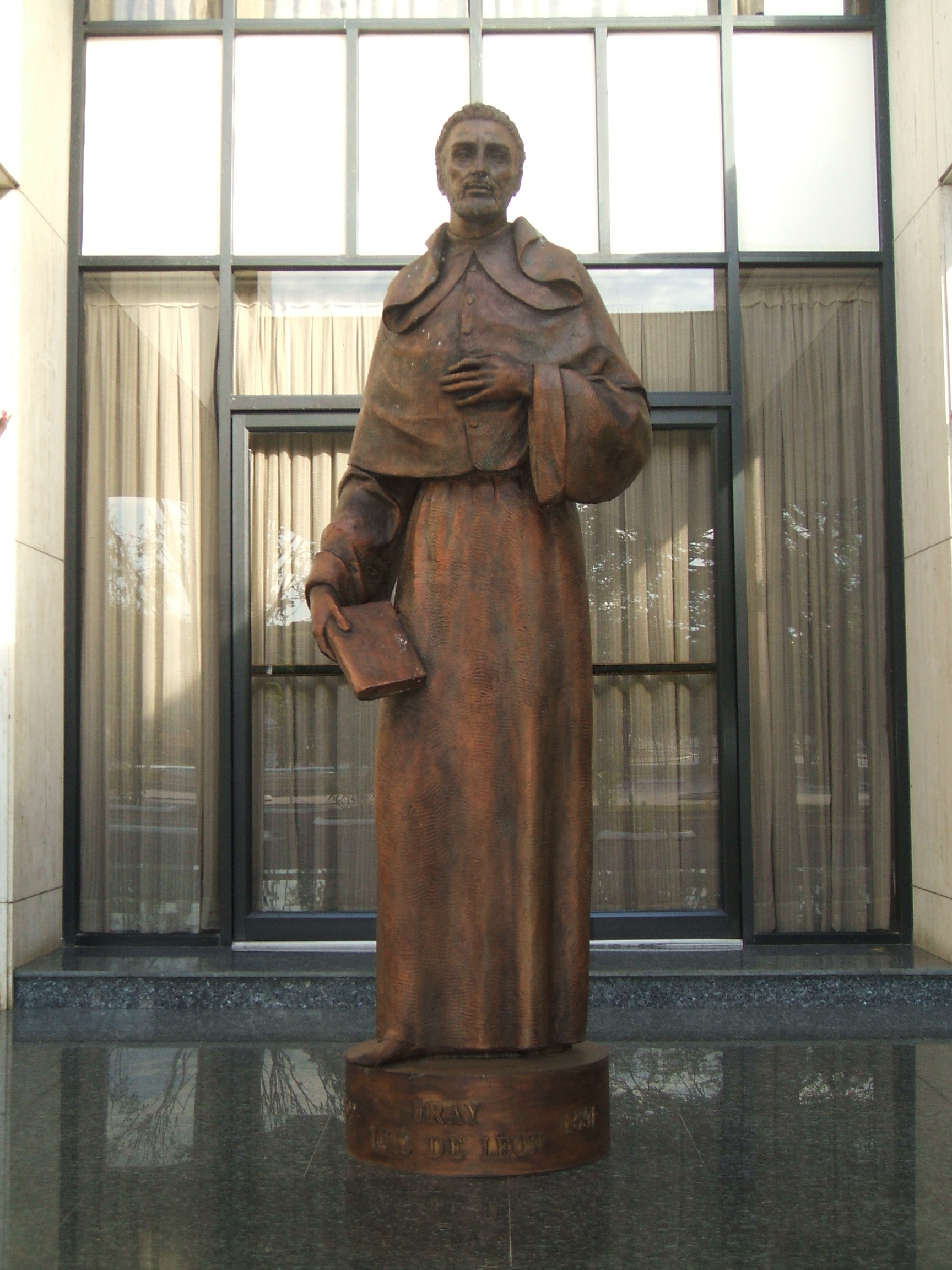
| Luis de León, a Baroque Augustinian theologian |
Saturday, August 11, 2012
I Am the Living Bread which has come down from Heaven. A brief commentary on this Sunday's Readings
This Sunday’s readings in the Ordinary Form Catholic mass will be:
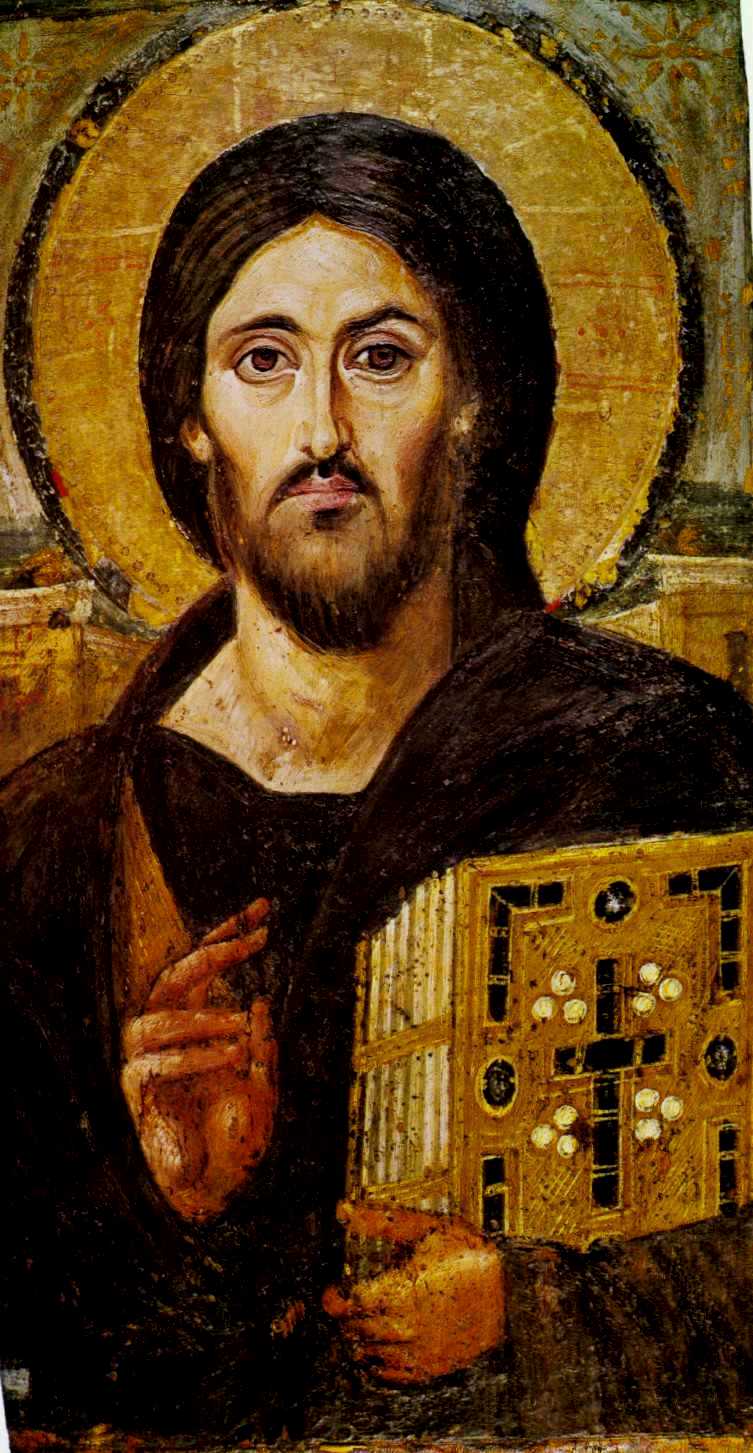 |
| 6th century icon of Christ from St. Catherine Monastery at Mount Sinai* |
1 Kings 19:4-8
Psalm 34:2-3, 4-5, 6-7, 8-9
Ephesians 4:30- 5:2
John 6:41-51
Below I only hope to offer a small reflection on such a great amount of Our Lord’s word’s to us. I am very new to reading Scripture, and so most of my focus will be on reading the New Testament works in the context of the Psalms and then perhaps the Old Testament works. A Christian who is deep in his faith would understand these texts far better than I do. I hope to look somewhat to the Patristic texts as well to get a view of the Church’s faith regarding the Sacred Mystery of Jesus the Living Bread from Heaven.
Thursday, August 9, 2012
St. Augustine’s Sermon 63, wake up Christ in your heart
 |
| Rembrandt painting of Jesus calming the storm |
Among one of St. Augustine’s shortest sermons, Sermon 63 is not a sermon that we know when it was composed. There are multiple sermons that exist from St. Augustine’s preaching on the story of Matthew 8 where the Apostles go with Christ in a boat only to have a storm brew up, wherein they wake up Jesus who calms the storm and chastises them for their lack of faith. Being among the shortest of St. Augustine’s sermons it is entirely possible that this is a later sermon of St. Augustine’s which had a tendency to be much shorter than his earlier sermons. Just as well if this sermon is a repeated lesson on earlier sermons it is likely that his parish already knew what he was going to say about Matthew 8, and so there was no need to say more. In any regard, let us listen to the Doctore Caritatis (Doctor of Charity).
Monday, August 6, 2012
“And Jesus Took with Him” a Carthusian reflection on the prayer of Jesus in the Transfiguration
 |
| Icon of the Transfiguration at St. Catherine Monastery at Mt. Sinai. It is an apse mosaic commissioned in the 6th century by Emperor Justinian the Great. |
This essay is for a reflection on today’s feast, the feast of the Transfiguration, in which Jesus took up with Him Sts. Peter, James, and John up to Mount Tabor to pray. This is a great feast and is the moment in which Jesus showed forth His divinity to His disciples as well as making Moses and Elijah spring forth to see Him. The theme of this essay concerns less regarding the Transfiguration itself but Christ’s model of prayer in bringing His disciples with Him to pray and embrace His divinity. There is much mystery to the Transfiguration, and much of our own life is played out in the hope that we will see Jesus in His divinity and that that Light which shined forth from Him in all holiness might shine upon our souls and make us holy.
Jesus took with Him Peter, James, and John and climbed the mountain to pray. (Luke 9:28)
Wednesday, August 1, 2012
St. Thomas of Aquinas on God’s Omnipotence (Summa Theologiae Part 1 Question 25 Article 3)
 |
| St. Thomas of Aquinas |
This article regards St. Thomas of Aquinas the Common view of the way in which we can think of God as being omnipotent, that is, all-powerful. There is much thought in modern days especially amongst those who do not hold the Faith that God’s omnipotence is incomprehensibly great or that God cannot possibly be omnipotent. This article here is intended as both a means to illuminate our faith and as a way to better comprehend the outstanding quality of God’s greatness. This is not a scholarly article, one ought to note, and so the inaccuracies to be found in my analysis of highly technical scholastic philosophy and theology are on account of my own inability to read the saint’s work. For those unaware of who St. Thomas of Aquinas is, I note that he is one of the most celebrated saints of the Catholic Church in regards to his teachings on theology and philosophy. His Summa Theologiae is the Doctor of the Church’s compendium of topics of theology and philosophy for theology students at the university he taught at. The life of St. Thomas of Aquinas is quite interesting and one can read more about it here. All in all then, let us learn from the saint and may God enlighten us to learn more about Him through His holy saints!
Bl. John Duns Scotus on God’s Omnipotence (Oxford Lectures on the Sentences of Peter Lombard, Book I Distinction 42-43)
 |
| Bl. John Duns Scotus |
This article is a part of a series of medieval scholastic theology regarding the topic of God’s omnipotence. This isn’t intended as a scholarly article but only a layman’s opinion and reading of a very small snippet of a holy man’s complex labyrinth of thought and devotion. It is very likely that I will make mistakes regarding the interpretation of the Subtle Doctor’s theology, but hopefully God will make an opportunity of this article to help us better know Him in our hearts and in our minds.
Now in this regard Bl. John Duns Scotus’ remarks on the power of God’s omnipotence comes from some of his lectures at Oxford regarding the Sentences in Four Books by Peter Lombard, an early Catholic who strove to assemble authorities and arguments for various doctrines of the Faith. Commenting and lecturing on the Sentences was mandatory for any person to become a doctor in theology or philosophy, etc. And so these Oxford Lectures, as I understand it are some of Bl. Scotus’ earlier work on these theological and philosophical issues, though I think it rivals St. Thomas of Aquinas’ later work in the matter of philosophical distinctions. To be fair however, Bl. Scotus was some time after St. Thomas and the universities were likely to have increased in rigor, and understanding of Aristotle and other key philosophical texts.
Here is the link by the way to the Oxford Commentary on Distinction 42 and 43.
Here is the link by the way to the Oxford Commentary on Distinction 42 and 43.
Subscribe to:
Posts (Atom)